


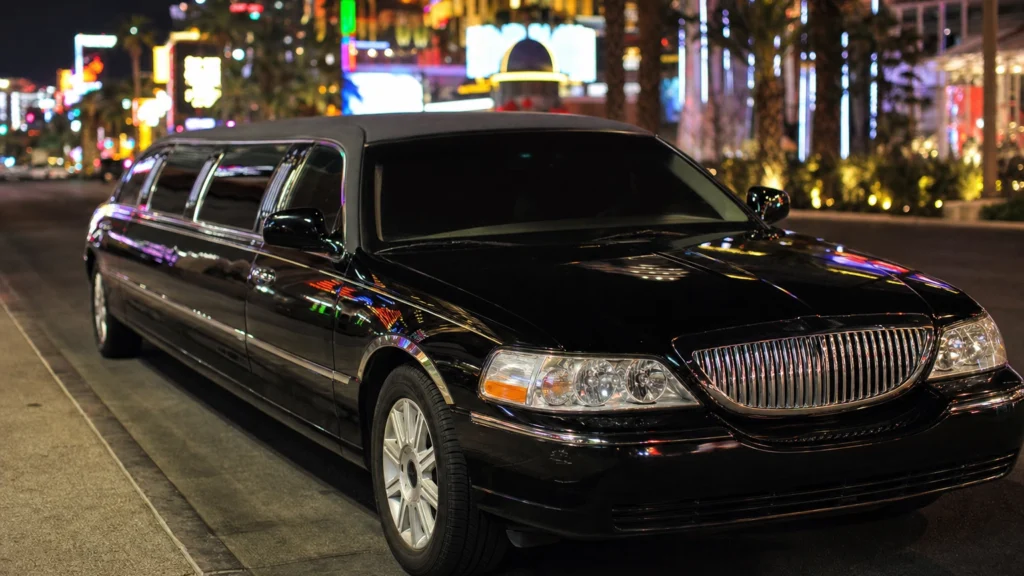
Limo tint is an aftermarket window film rated at about 5% VLT (visible light transmission), meaning it blocks roughly 95% of visible light and is the darkest shade most tint shops sell. It gets its nickname from the blacked-out rear glass you see on limousines. The darkness that looks great on a limo, though, is heavily restricted on an everyday car, and in Nevada it is flatly illegal on your front side windows.
Limo tint is window film with a visible light transmission (VLT) of roughly 5%, the darkest shade in common use. It allows only about 5% of outside light into the cabin, creating a near-blackout look. The name comes from limousines, whose passenger windows are often tinted this dark for privacy.
- “Limo tint” means about 5% VLT, the darkest common window film. Lower VLT equals darker glass, so 5% is far darker than the 20% or 35% most drivers pick.
- It is not legal everywhere just because limos use it. In Nevada your front side windows must pass at least 35% of light, with a 7% tolerance.
- Rear and rear-side windows can go as dark as you want in Nevada, but only if the vehicle keeps dual outside mirrors.
- What police measure is net VLT, the film plus your factory glass combined, not the number printed on the film box.
- You do not need illegal tint to ride in blacked-out privacy. A professionally outfitted limousine or black car gives you the look without the ticket.
What’s in This Guide
- What Limo Tint Actually Is
- How Window Tint Darkness Works (VLT)
- Limo Tint vs. Factory Privacy Glass
- Is Limo Tint Legal? Nevada Window Tint Law
- Why Limousines Can Run Tint That Dark
- Should You Put Limo Tint on Your Own Car?
- How to Get Limo-Level Privacy Without the Legal Risk
- Common Questions About Limo Tint
- Related Terms
What Limo Tint Actually Is
“Limo tint” is not a brand or a special type of film. It is a nickname for the darkest shade of window film in everyday use, rated at roughly 5% VLT. The term stuck because this level of darkness is what people picture on a stretch limousine, where the back windows are blacked out so passengers cannot be seen from the curb.
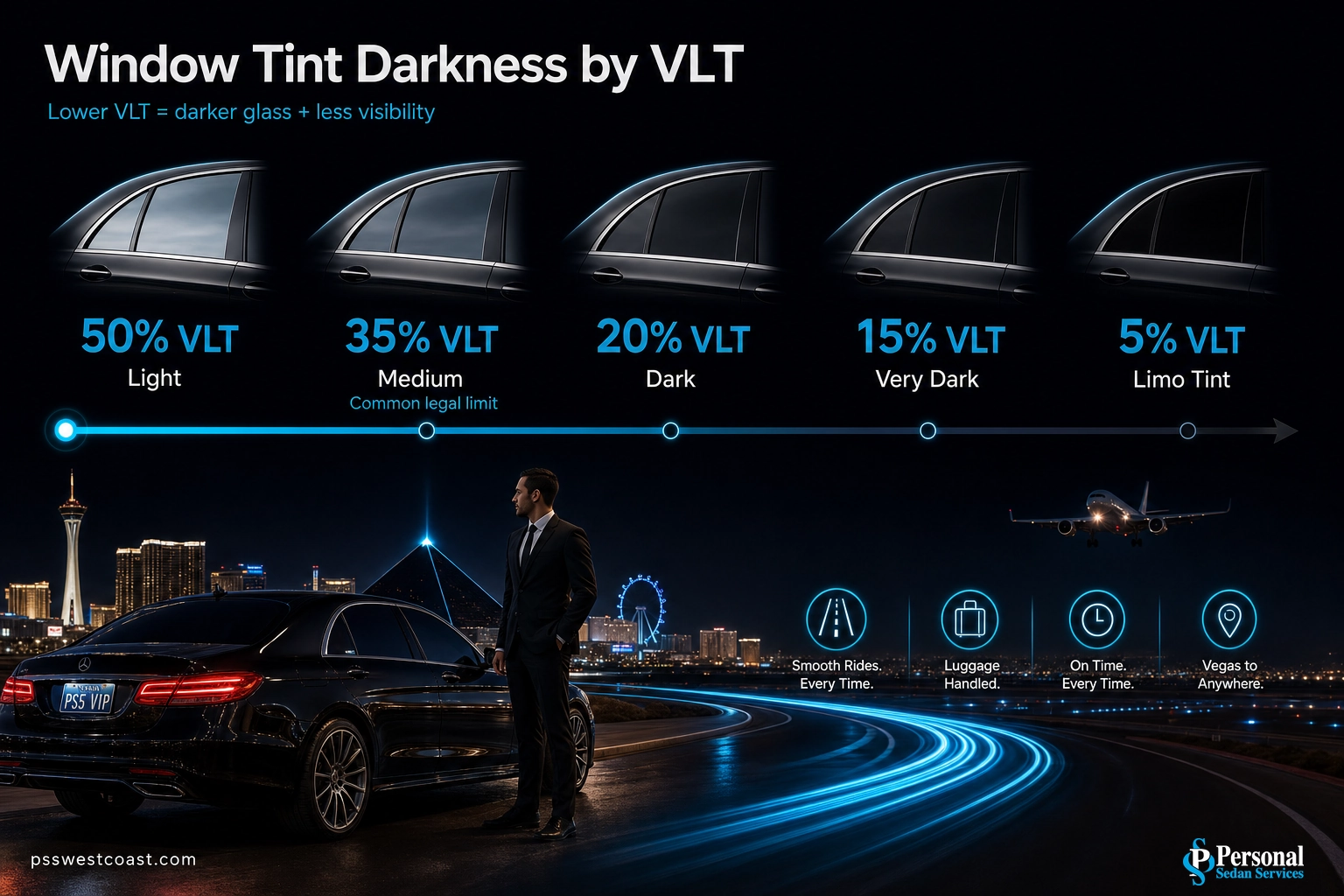
The number that defines it is VLT, short for visible light transmission. A 5% VLT film lets only about 5% of visible light pass through the glass. For comparison, a common “legal in most places” tint is 35% VLT, and a very light tint is 50% or more. The lower the number, the darker and more private the window.
Because 5% is so dark, you will mostly see it where privacy matters more than visibility: the rear compartment of a limousine, a security or executive vehicle, or the back glass of an SUV. On those windows it is doing exactly what it is designed to do. The trouble starts when the same film goes on the windows a driver needs to see through.
How Window Tint Darkness Works (VLT)
Think of VLT like a dimmer switch for your windows. At 100% there is no film and all the light comes through. At 5% the switch is turned almost all the way down and the glass reads as nearly black from outside. Every tint percentage you have heard of is simply a point on that dimmer.
Here is the part most quick answers online miss: the rating that matters legally is net VLT, the combined reading of the film plus your factory glass. According to the International Window Film Association, films are rated by net visible light transmittance, the light that passes through after the film is installed on the glass, so your window’s own tint counts too. Most car glass already blocks a little light, so a “5%” film on a window that is not perfectly clear will measure even darker than 5% on a meter.
How it works in plain steps:
- Your factory glass has its own VLT, often in the high 70s or 80s for front windows.
- The installer adds a film with its own rated VLT (for limo tint, about 5%).
- A VLT meter reads the two together. That combined net number is what an officer checks against the law.
Before you buy any dark film, have the installer measure your glass first and calculate the net VLT. A film sold as “35% legal” can still fail inspection once your factory glass is added in. Knowing the net number keeps you on the right side of a traffic stop.
Source: International Window Film Association, executive director interview
Limo Tint vs. Factory Privacy Glass
The single biggest point of confusion is the difference between limo tint and factory privacy glass. They look similar in a parking lot but they are not the same thing, and they are not treated the same by the law.
Factory privacy glass is darker glass the automaker builds into the rear windows of many SUVs, vans, and trucks. It is usually in the 15% to 26% VLT range, dark enough to hide cargo but far lighter than true limo tint. Limo tint is aftermarket film, added later, that pushes the window down to about 5% VLT.
| Feature | Limo Tint (aftermarket film) | Factory Privacy Glass |
|---|---|---|
| Typical VLT | About 5% (near blackout) | About 15% to 26% |
| How it is applied | Film installed over the glass after purchase | Tint molded into the glass at the factory |
| Where it is used | Any window a shop will apply it to | Rear side and back windows only |
| Daytime see-through | Very hard to see in | Shapes visible, details hidden |
| Counts toward the legal limit? | Yes, measured as net VLT | Yes, but usually within legal range |
The practical takeaway: factory privacy glass is a mild privacy feature that usually stays legal, while limo tint is a deliberate near-blackout that often does not. If you want dark rear windows and you want to keep it simple, privacy glass or a mid-range film gets you most of the look without the risk.
Is Limo Tint Legal? Nevada Window Tint Law
This is where the limousine association backfires on everyday drivers. Because limos wear it, people assume 5% tint is legal. For your own car in Nevada, it depends entirely on which window you are talking about.
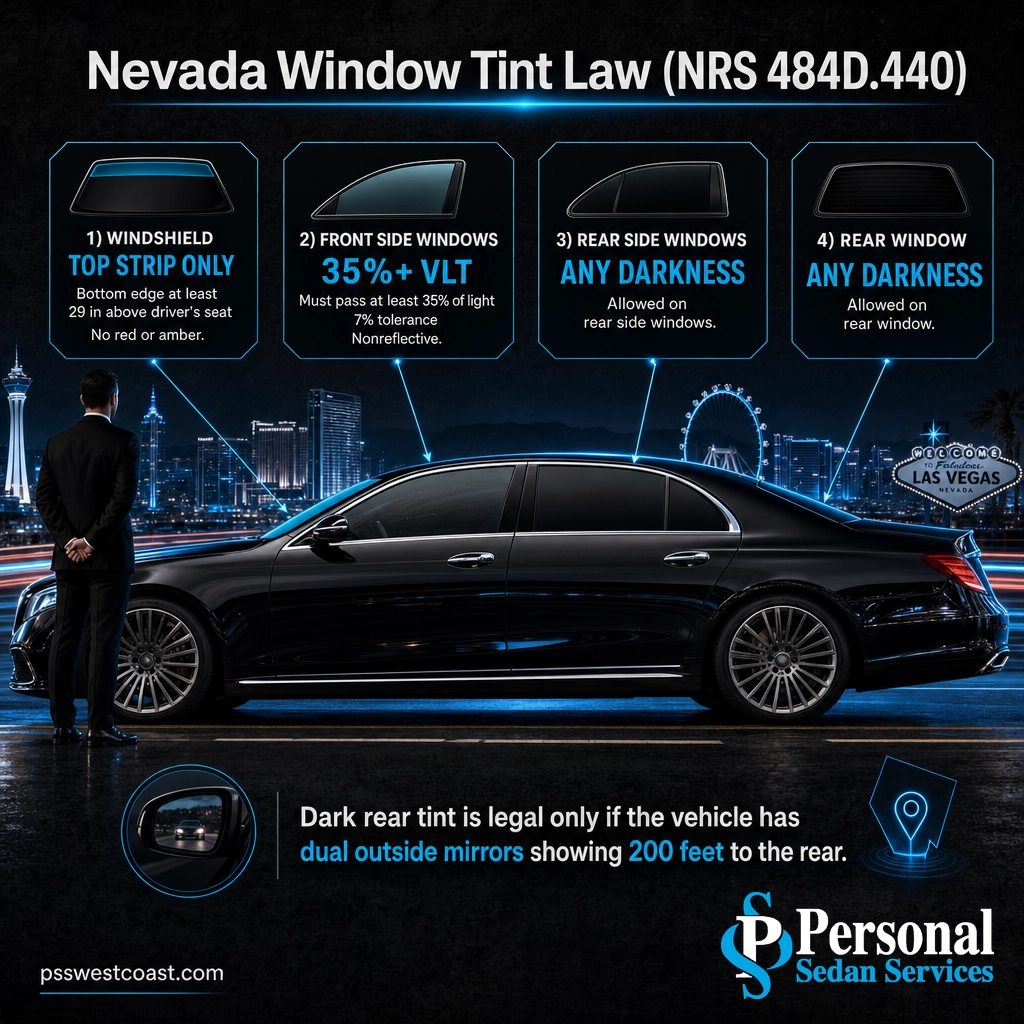
Under Nevada Revised Statutes 484D.440, the windows to the immediate left and right of the driver must be nonreflective and let through at least 35% of light, with a stated tolerance of 7%. A 5% limo-tint film is nowhere close, so it is illegal on your front doors.
The rear is a different story. Nevada places no darkness limit on the side windows behind the driver or on the rear window, as long as the vehicle has outside mirrors on both sides that show the highway for at least 200 feet to the rear. That mirror rule is the trade-off for giving up the rear view through dark glass.
The windshield has its own rule. Nevada allows nonreflective tint only on the top strip, with the bottom edge of the material at least 29 inches above the undepressed driver’s seat, and it cannot be red or amber. A full windshield tint is not permitted.
Limos have 5% tint, so 5% must be legal on my car. It is not. Limousines are legal because their dark glass sits behind the driver and they keep dual side mirrors, exactly where Nevada allows any darkness. Put that same 5% film on your front doors and you are over the 35% limit the moment a meter touches the glass. Officers carry handheld VLT meters, and a failed reading can mean a fix-it citation and a mandatory removal.
One more myth worth clearing up: Nevada’s statute does not contain a blanket medical exemption for dark tint. The only exemption path is in subsection 6, which lets the DMV Director create exceptions by regulation. Do not assume a doctor’s note alone legalizes limo tint; confirm current rules with the Nevada DMV before you install anything that dark.
Source: Nevada Revised Statutes 484D.440
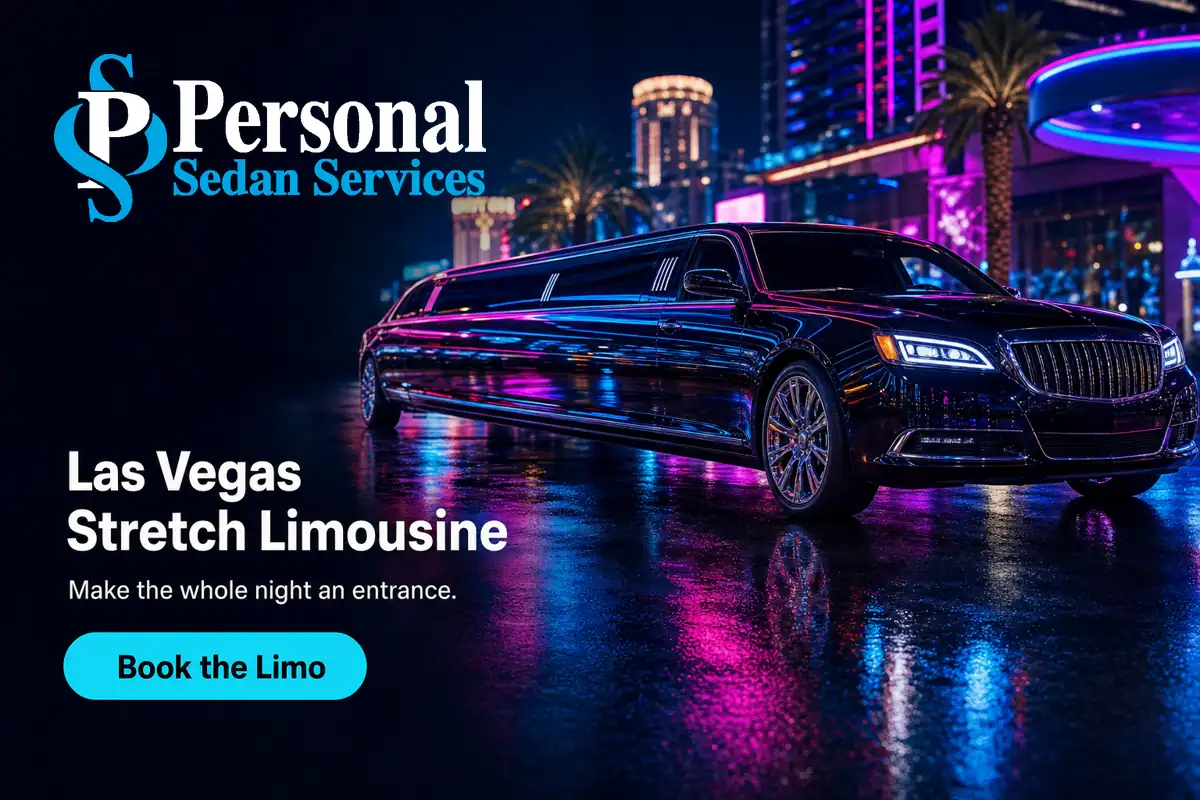
Why Limousines Can Run Tint That Dark
A limousine is built around the rule above rather than against it. The windows the passengers sit behind are all to the rear of the driver, which is precisely the zone Nevada leaves unrestricted. The driver’s own windows stay within the legal range, and the vehicle carries the dual side mirrors the law requires.
That is the whole trick. The darkness is placed where the law allows it and the driver’s sightlines stay clear and legal. Professional operators also keep the film maintained and the glass clean, so the privacy never comes at the cost of a safe, legal driver’s view.
The reason limo tint works on a limo and fails on a commuter car is placement, not loophole. Dark glass behind a professional driver with proper mirrors is privacy done right. The same film on the windows you steer by is a ticket waiting to happen. When our passengers want to be unseen on the Strip, the darkness is already where it legally belongs.
Should You Put Limo Tint on Your Own Car?
For most drivers, the honest answer is no, at least not on the front. The privacy is real, but so are the downsides, and they stack up fast on a daily driver.
- Night visibility. At 5% VLT very little light reaches your eyes after dark. Reversing, lane changes, and spotting pedestrians all get harder, which is the safety reason the front-window limit exists.
- Enforcement. A handheld VLT meter reads your net tint in seconds. Too dark, and you can be cited and ordered to remove or replace the film at your own cost.
- Resale and inspection. Illegal tint can complicate a sale or a required inspection, and removal of a cured film is slow, messy work.
If you still want dark rear glass, the legal path is straightforward: keep your front side windows at 35% or lighter, put the dark film only on the rear side and back windows, and make sure your mirrors meet the 200-foot rule. That gives you real privacy in the back while keeping the driver’s windows compliant.
How to Get Limo-Level Privacy Without the Legal Risk
There is a simpler way to ride behind blacked-out glass on the Strip without touching your own car: let a professional vehicle do it. When privacy is the point, a ride where the dark tint is already legal, maintained, and chauffeured beats gambling on a tint ticket.
That is exactly what a professionally outfitted limousine is for. The rear compartment is private by design, the darkness sits where Nevada allows it, and a licensed chauffeur keeps the driver’s view clear and legal. You get the unseen-passenger experience the first time you step in, with none of the install cost, the removal risk, or the roadside meter.
For a single arrival where you simply want to show up unseen, a discreet black car does the same job in a lower-profile package. And for groups, our larger vehicles carry the same private rear glass across the whole party.
Arrive in a private VIP black car
Ride with a professional chauffeur
Common Questions About Limo Tint
What percent is limo tint?
Is limo tint legal in Nevada?
Can you see out of 5% limo tint at night?
Why can limousines have such dark windows?
What is the difference between limo tint and factory privacy glass?
Related Terms
- VLT (visible light transmission): the percentage of visible light a window lets through; lower means darker. See the International Window Film Association.
- Net VLT: the combined light reading of film plus factory glass, which is what the law measures.
- Factory privacy glass: automaker-installed darker rear glass, usually 15 to 26% VLT, lighter than limo tint.
- AS-1 line: the manufacturer’s mark near the top of a windshield that marks where tint rules change; Nevada instead sets a 29-inch height limit.
- Ceramic tint: a film type that blocks heat and glare at any darkness level, so you can get sun protection without going to 5%.
- Reflective tint: mirrored film that bounces light away; Nevada requires front side windows to be nonreflective.
- Limousine service: chauffeured transport in a vehicle whose private rear tint is already legal. Explore our Las Vegas fleet.
Sources & Methodology
Legal limits in this guide are drawn directly from the text of Nevada Revised Statutes 484D.440. The visible light transmission and net-VLT explanation reflects guidance from the International Window Film Association. Tint percentage ranges for factory privacy glass are industry-standard figures; always confirm your own vehicle’s net VLT with a professional installer and verify current rules with the Nevada DMV before applying any film.
Sources: Nevada Revised Statutes 484D.440 | International Window Film Association
