


Yes, you can drink the tap water in Las Vegas. The water that reaches your glass, your hotel sink, and the drinking fountains along the Strip meets or surpasses federal drinking water standards. What throws most visitors off is not safety, it is taste and texture: Las Vegas has some of the hardest tap water in the country, so it tastes more mineral-heavy and leaves spots on glasses. This guide covers where the water comes from, what the official testing shows, why it feels different, and when a filter or bottle actually makes sense.
- Las Vegas tap water is safe to drink and meets or surpasses federal drinking water standards, according to the Las Vegas Valley Water District.
- Nearly 90 percent of the supply comes from the Colorado River via Lake Mead, treated with ozone, filtration, and chlorine.
- The water is very hard, about 280 mg/L (16 grains per gallon), which affects taste and leaves mineral spots but is not a health concern.
- Hotel tap water is the same municipal supply and is safe; flush a cold tap for a few seconds if it has been sitting in old fixtures.
- Filtered or bottled water is a taste preference, not a safety requirement, and staying hydrated matters in the desert heat.

What’s in This Guide
- The Short Answer
- Where Las Vegas Tap Water Comes From
- Is It Actually Safe? What the Standards Say
- Why It Tastes and Feels Different: Hard Water Explained
- Can You Drink the Water in Your Hotel Room?
- Tap, Filtered, or Bottled: What Visitors Should Do
- Staying Hydrated in the Desert
- Frequently Asked Questions
- Related Las Vegas Guides
The Short Answer
If you have ever filled a glass at a Las Vegas hotel and noticed it tastes a little different, you are not imagining it. The safety question and the taste question are two separate things, and almost everything people grumble about online is really about taste, spots on the shower door, and mineral buildup, not about whether the water will make them sick.
Where Las Vegas Tap Water Comes From
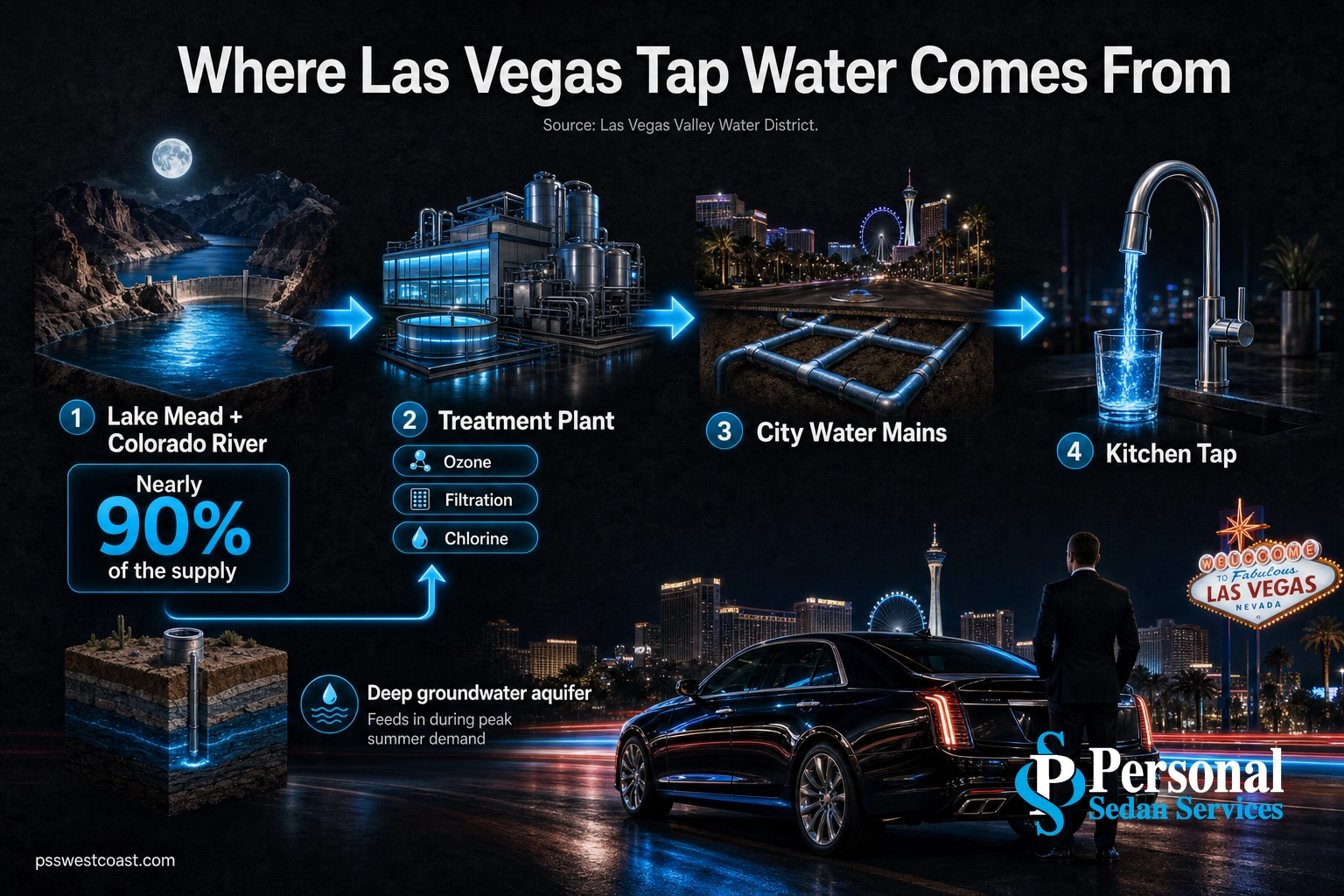
Las Vegas sits in the Mojave Desert, but its drinking water does not come from under the Strip. It comes from the Colorado River. The Las Vegas Valley Water District reports that nearly 90 percent of the valley’s drinking water is drawn from the Colorado River via Lake Mead, with the rest pulled from a deep groundwater aquifer beneath the valley that is used mostly to meet peak summer demand.
Before any of it reaches your tap, the Lake Mead supply runs through a multi-step treatment process at the Southern Nevada Water Authority’s facilities. The Las Vegas Valley Water District describes it this way: ozone is infused into the water to destroy bacteria and other microorganisms, the water is aerated to reduce odors, fine particles are grouped together through flocculation and then removed by a filter built from layers of anthracite coal, silica sand, and garnet sand, and finally chlorine is added as the water leaves the plant to keep it protected all the way to your faucet. Groundwater is naturally filtered underground and gets a chlorine treatment as it enters the system.
Lake Mead is also a genuinely worthwhile stop if you have an extra day, sitting about 30 miles southeast of the Strip near Boulder City.
Source: Las Vegas Valley Water District, Testing & Treatment
Is It Actually Safe? What the Standards Say
This is the part that matters most, so here it is plainly: the water meets the rules that exist to keep it safe. The Las Vegas Valley Water District states that to make sure its water meets or surpasses federal drinking water standards, it samples the supply more often than federal regulations require. Regulated contaminants are measured against the EPA’s Maximum Contaminant Levels, and the district publishes the results every year in its Water Quality Summary.
In the current (2026) Water Quality Summary, the contaminants that carry federal health limits came in at or below those limits. Lead, for example, registered below the detection threshold in the treated supply. That is the key distinction for a visitor: the water leaving the treatment plant and traveling through the city’s mains is held to enforceable federal health standards.
Source: Las Vegas Valley Water District, Water Quality Reports | U.S. EPA, Safe Drinking Water Act
Why It Tastes and Feels Different: Hard Water Explained
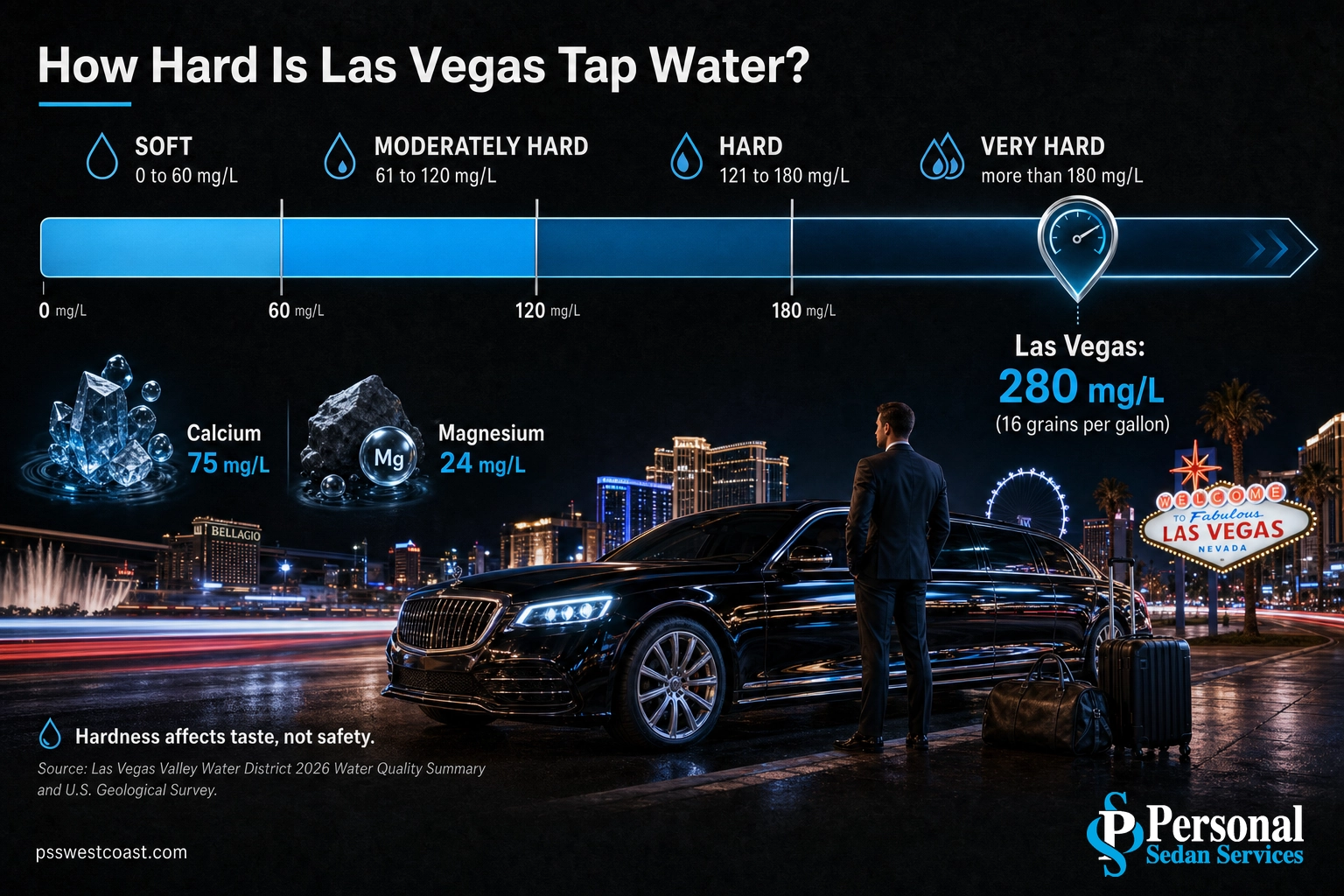
Here is the real reason Las Vegas water has a reputation. The Colorado River picks up calcium and magnesium on its long journey to Lake Mead, and those minerals stay in the water after treatment. The result is very hard water. The 2026 Water Quality Summary lists total hardness at about 280 mg/L, which is roughly 16 grains per gallon, with calcium near 75 mg/L and magnesium near 24 mg/L.
To put that number in context, the U.S. Geological Survey classifies any water above 180 mg/L of calcium carbonate as “very hard.” Las Vegas is well past that line.
| Classification | Hardness (mg/L as calcium carbonate) | Where Las Vegas lands |
|---|---|---|
| Soft | 0 to 60 | |
| Moderately hard | 61 to 120 | |
| Hard | 121 to 180 | |
| Very hard | More than 180 | Las Vegas, ~280 mg/L |
The single most useful thing to understand is that hard water is a taste-and-nuisance issue, not a safety issue. The USGS notes that hardness is not a health concern, and that the calcium and magnesium in it can even add small amounts of those minerals to your diet. The EPA agrees on the regulatory side: hardness and total dissolved solids fall under secondary standards, which the agency calls non-enforceable guidelines for aesthetic effects like taste, color, and staining rather than health risks. The light chlorine residual that keeps the water safe in the pipes also adds a faint taste that filtered water removes.
Hard water vs. unsafe water: clearing up the confusion
These two ideas get tangled together constantly. “Hard” describes how many dissolved minerals the water carries. “Unsafe” would mean it contains contaminants above health limits. Las Vegas water is firmly in the first category and firmly out of the second. You can drink very hard water every day of your life with no harm; you will just spend more time wiping spots off glassware and may notice soap does not lather as easily.
Source: U.S. Geological Survey, Hardness of Water | U.S. EPA, Secondary Drinking Water Standards
Can You Drink the Water in Your Hotel Room?
Yes. Every hotel, resort, and short-term rental in the valley is served by the same municipal supply that reaches local homes, so the water in your room starts out exactly as safe as the water anywhere else in the city. There is no separate, lower-grade “hotel water.”
The one sensible habit worth keeping has nothing to do with the city’s water and everything to do with a building’s own plumbing. The EPA points out that the most common source of lead in drinking water is not the supply, it is older pipes, brass faucets, and solder inside a building. In a room where the tap may have sat unused for hours, the EPA’s standard advice applies anywhere in the country: let the cold water run for a few seconds to flush the line, and use cold (not hot) water for drinking. Boiling does not remove lead, so flushing is the simple move.
Source: U.S. EPA, Basic Information About Lead in Drinking Water

Tap, Filtered, or Bottled: What Visitors Should Do
Since safety is settled, the choice comes down to taste, convenience, and how much plastic you want to carry. Here is the honest breakdown.
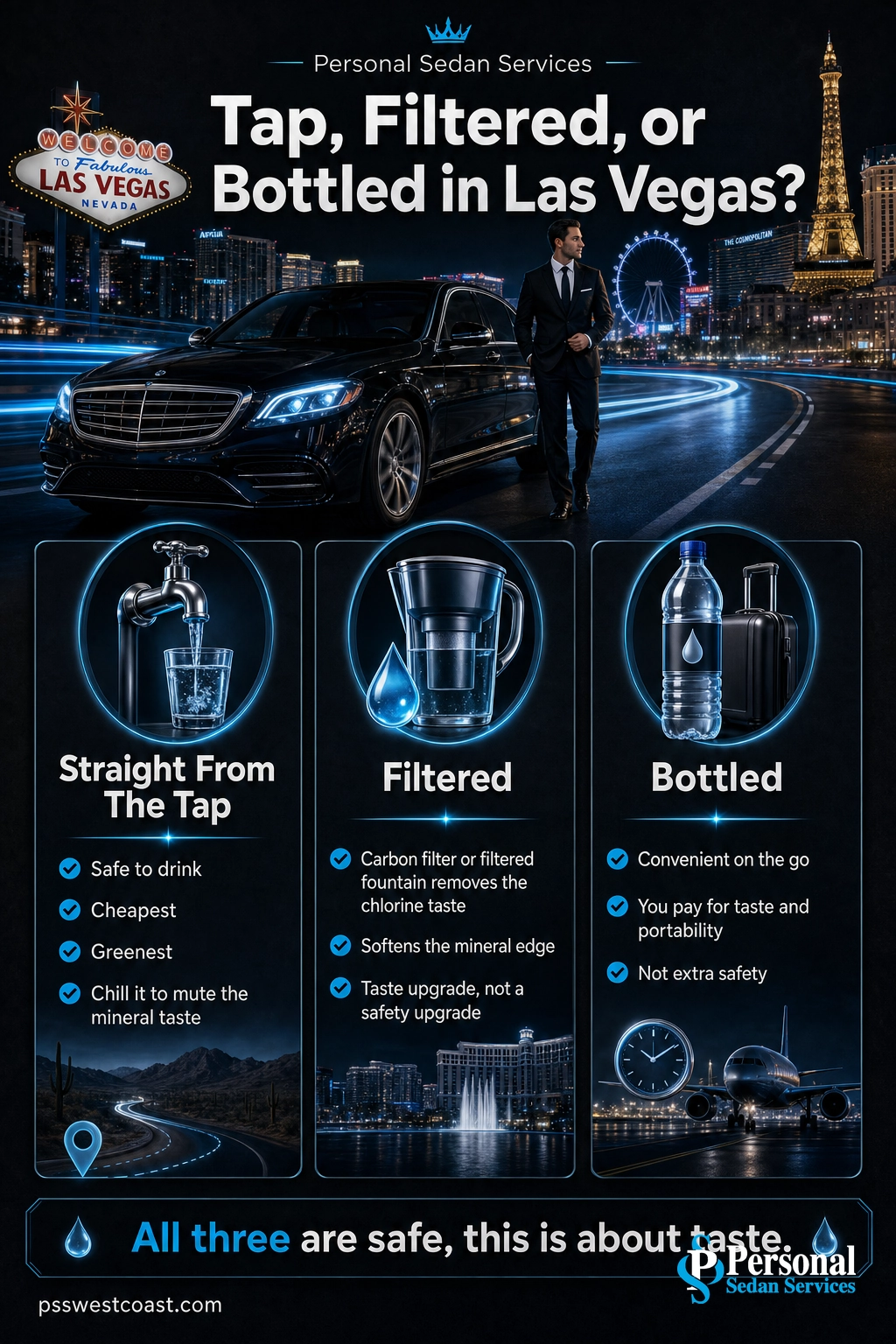
Drink it straight from the tap
Perfectly fine. If you do not mind a slightly mineral taste, the tap is the cheapest and greenest option. Chilling it in the fridge or over ice mutes the hardness and the chlorine note considerably.
Filter it
If taste is your sticking point, a simple carbon filter (a pitcher, a faucet attachment, or the filtered fountain many resorts now have) removes most of the chlorine taste and softens the mineral edge. It does not make the water any “safer,” because it already met the standard, it just makes it more pleasant to drink.
Buy bottled
Convenient, and sometimes the easy answer when you are out at a show, a pool party, or a convention. There is nothing wrong with it, but know that you are paying for taste and portability, not for a safety upgrade over the tap.
Staying Hydrated in the Desert
The thing that actually puts visitors at risk in Las Vegas is not the water quality, it is not drinking enough of it. Summer afternoons routinely pass 100 degrees, the humidity is low, and a day of walking the Strip, lounging poolside, or hiking Red Rock Canyon pulls fluid out of you faster than you notice. Alcohol and casino air-conditioning both add to it.
Carry water, refill often, and drink before you feel thirsty. If you are planning your trip around the weather, our guide to the best time of year to visit and our breakdown of what to pack for the heat both pair well with a hydration plan. If you are surprised the desert gets cold too, what the weather is actually like here is worth a read.
One underrated way to stay comfortable: do not spend your energy fighting traffic and parking in the heat. When you land, let a professional handle the driving so you arrive rested and ready. Personal Sedan Services runs curbside airport pickups from Harry Reid International and a trusted local car service across the valley, chauffeured by licensed, background-checked drivers. It is the easy way to skip the rideshare hassle and keep your focus on the trip.
Frequently Asked Questions
Is Las Vegas tap water safe to drink?
Why does Las Vegas tap water taste funny?
Can I drink the tap water in my Las Vegas hotel?
Is Las Vegas water really recycled sewage?
Should visitors buy bottled water in Las Vegas?
Related Las Vegas Guides
- Best Time to Visit Las Vegas: a month-by-month look at heat, crowds, and events so you can plan your trip and your hydration.
- What to Wear in Las Vegas: day, night, and pool outfits for the desert climate.
- Does It Snow in Las Vegas?: what the weather actually does across the seasons.
- Cost of Living in Las Vegas: a real monthly budget breakdown, utilities included.
- Best Things to Do in Las Vegas: the attractions, shows, and outdoor stops worth your time.
- Las Vegas Neighborhood Guide: where to stay across the valley.
Methodology & Sources
Every figure in this guide comes from primary sources. Water source, treatment steps, and federal-standards compliance are from the Las Vegas Valley Water District. Hardness, calcium, and magnesium values are from the district’s 2026 Water Quality Summary (the latest published report). Water-hardness classifications are from the U.S. Geological Survey. Statements about secondary standards and lead are from the U.S. Environmental Protection Agency. Nothing here is estimated or invented.
Primary sources:
- Las Vegas Valley Water District, Testing & Treatment
- Las Vegas Valley Water District, 2026 Water Quality Summary (PDF)
- Las Vegas Valley Water District, Water Quality Reports
- U.S. Geological Survey, Hardness of Water
- U.S. EPA, Secondary Drinking Water Standards
- U.S. EPA, Basic Information About Lead in Drinking Water
